
Deixe um recado
Se você estiver interessado em nossos produtos e quiser saber mais detalhes, deixe uma mensagem aqui e responderemos assim que possível.

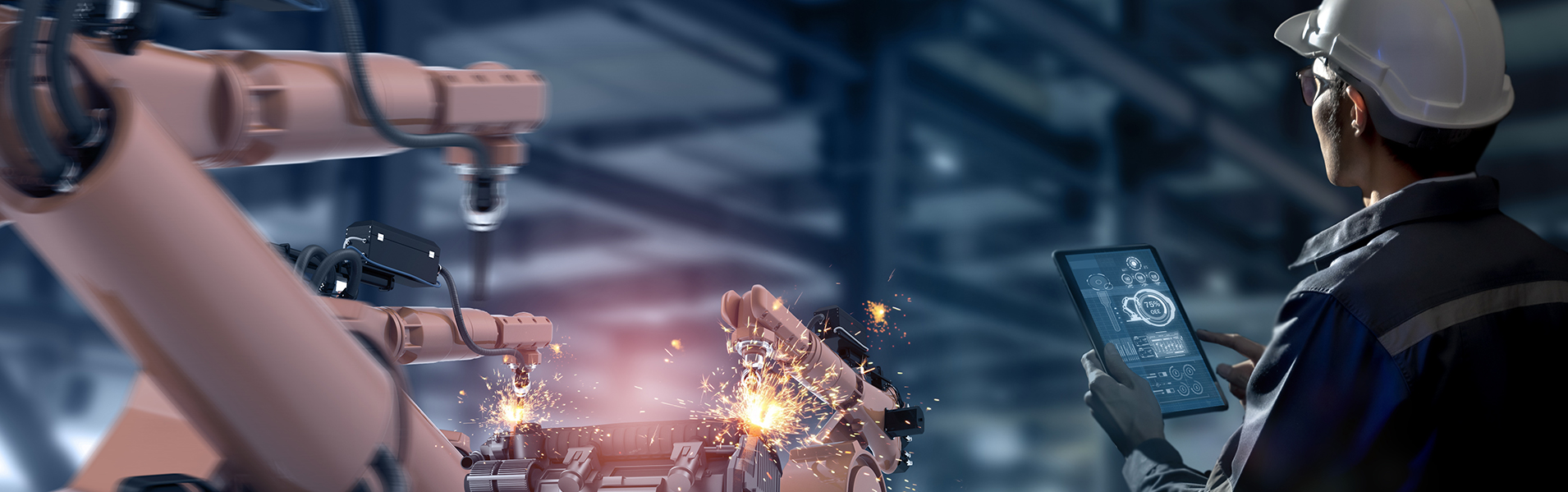

The core quality of a paint brush is defined by its bristle filling process. Bristle density, fastening firmness and surface uniformity directly determine painting smoothness, bristle loss rate and service life. Over the past century, bristle filling technology has evolved from manual craftsmanship to fully automated precision manufacturing, reshaping productivity and quality benchmarks for the global brush-making industry.
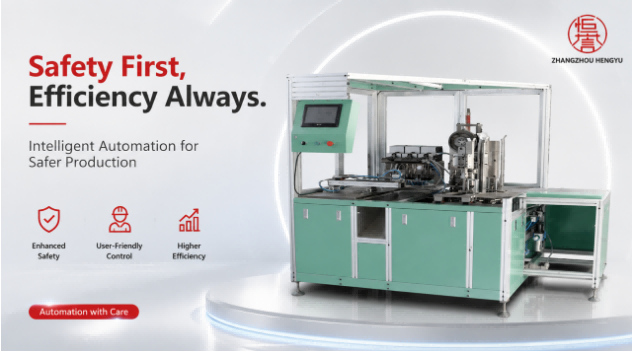
Before the 1950s, all bristle filling work was done entirely by hand. Skilled workers sorted natural bristles into uniform tufts and secured each one into metal ferrules manually. An experienced craftsman could produce only a few hundred brushes per day, with visible variations in bristle weight and tightness across units. Manual production suffered from two major flaws: up to 15% weight deviation for same-size brushes, causing raw material waste, and inconsistent crimping force that led to premature bristle shedding. Limited by handcraft constraints, flat brushes dominated the market, while round brushes, wall brushes and other special shapes remained niche and high-cost products.
From the mid-20th century, semi-automatic filling machines emerged. Driven by mechanical cam structures, they replaced part of manual labor in drilling, tuft feeding and stamping, lifting per-worker output several times over. However, their limitations were prominent. They relied heavily on skilled operators for material loading and size changeover, with equipment uptime hovering around 65%. Mechanical transmission gaps caused noticeable positioning errors, and switching between brush sizes required replacing multiple mechanical parts, making them unsuitable for multi-variety, small-batch production.
The 21st century witnessed a technological leap into the era of fully automatic CNC bristle filling machines. Servo drive systems and electronic cam technology replaced traditional mechanical cams, eliminating transmission backlash completely. Positioning accuracy reached ±0.05 mm, and hourly output surged to over 1,200 pieces — a 200% increase compared with semi-automatic models. Operating noise dropped below 62 dB, and average trouble-free runtime exceeded 12,000 hours, greatly reducing long-term operational costs. Premium models also integrate machine vision and photoelectric sensors for real-time process monitoring, realizing closed-loop control from feeding to finished products.
Yet no universal machine can deliver optimal performance for all brush types. Flat paint brushes follow standard rectangular filling patterns and are the easiest to automate. Round brushes require circular radial tuft placement, demanding high-precision rotary positioning. Large wall and ceiling brushes carry much heavier tufts and need strong, precise crimping to prevent loosening. Thin detail brushes with dense tiny holes require micro-level feeding accuracy to avoid empty holes or missing tufts. For years, brush manufacturers had to source equipment from different vendors, facing high costs and incompatible process parameters.
With over 20 years of industry expertise, Zhangzhou Hengyu Automation Technology provides a complete matrix of bristle filling machines covering all brush categories, combining proven reliable technology for mainstream flat brushes with dedicated solutions for specialty types.
For standard flat paint brushes, Hengyu’s machines feature stable servo control and consistent tuft feeding, delivering excellent uniformity and high yield in long-run mass production.
For round brushes, a specialized rotary filling mechanism ensures symmetrical, full bristle distribution, solving the common industry pain point of uneven, misaligned patterns.
For 3''–6'' wall and ceiling brushes, the combined bristle filling and ferrule sorting model optimizes heavy tuft metering and high-force crimping, while reducing manual workstations.
For 0.5''–1'' thin and small-size brushes, a precision micro feeding system and miniature filling needles guarantee accurate tiny tuft placement without missing holes.
Paired with complementary ferrule making, handle inserting & nailing and brush packaging equipment, Hengyu delivers one-stop full-line production solutions trusted by customers across dozens of countries worldwide.
Learn more on our official website: https://www.hengyubrush.com/
From handcrafted tufting to intelligent digital manufacturing, the evolution of bristle filling machines reflects the brush industry’s relentless pursuit of higher precision and efficiency. As AI vision and digital process management advance further, the technology will continue toward smarter, more flexible production.


 Rede IPv6 suportada
Deixe um recado
Digitalizar para Wechat :

Digitalizar para WhatsApp :