
Deixe um recado
Se você estiver interessado em nossos produtos e quiser saber mais detalhes, deixe uma mensagem aqui e responderemos assim que possível.


In the paint brush industry, a larger tool is never just a scaled-up version of a smaller one. Wall brushes, or block brushes, are engineered for high-efficiency large-surface coating, and their manufacturing specifications are far more rigorous than those of standard flat brushes. Every core component is held to tighter engineering tolerances to deliver structural integrity, consistent performance, and uniform appearance. Three key factors account for these higher requirements.

First, wall brush ferrules require greater wall thickness than flat brush ferrules. With a wider brush head comes higher mechanical stress during both assembly and end-use application. A thicker-gauge ferrule provides the rigidity needed to resist deformation, which is critical whether the brush is made by hand or by machine. This naturally means higher raw material input and greater forming force, but it is an unavoidable requirement: only a sufficiently strong ferrule can maintain its shape under bristle tension and crimping pressure, ensuring the entire brush head stays neat, aligned, and visually consistent.
Second, wall brushes call for longer bristle filaments than smaller flat brushes. This is a structural necessity rather than an aesthetic choice. A larger brush body needs longer bristles to evenly distribute anchoring tension across the full width of the head and guarantee overall stability. This is particularly important in automated production: bristles that are too short cannot be securely fixed during the bristle-setting process, resulting in loose filaments and excessive shedding. Proper bristle length also preserves the full, balanced profile of the brush head, a core quality benchmark for professional painters.
Third, the thickness of the internal setting wedge must not exceed 60% of the ferrule’s wall thickness. This is a well-established industry limit with clear practical implications. An over-thick wedge not only makes bristle insertion and fixation much more difficult during assembly, but also forces the ferrule opening outward, creating a “fish mouth” deformation. This defect damages the clean, uniform edge of the brush head, ruining its appearance while also weakening long-term bristle retention.
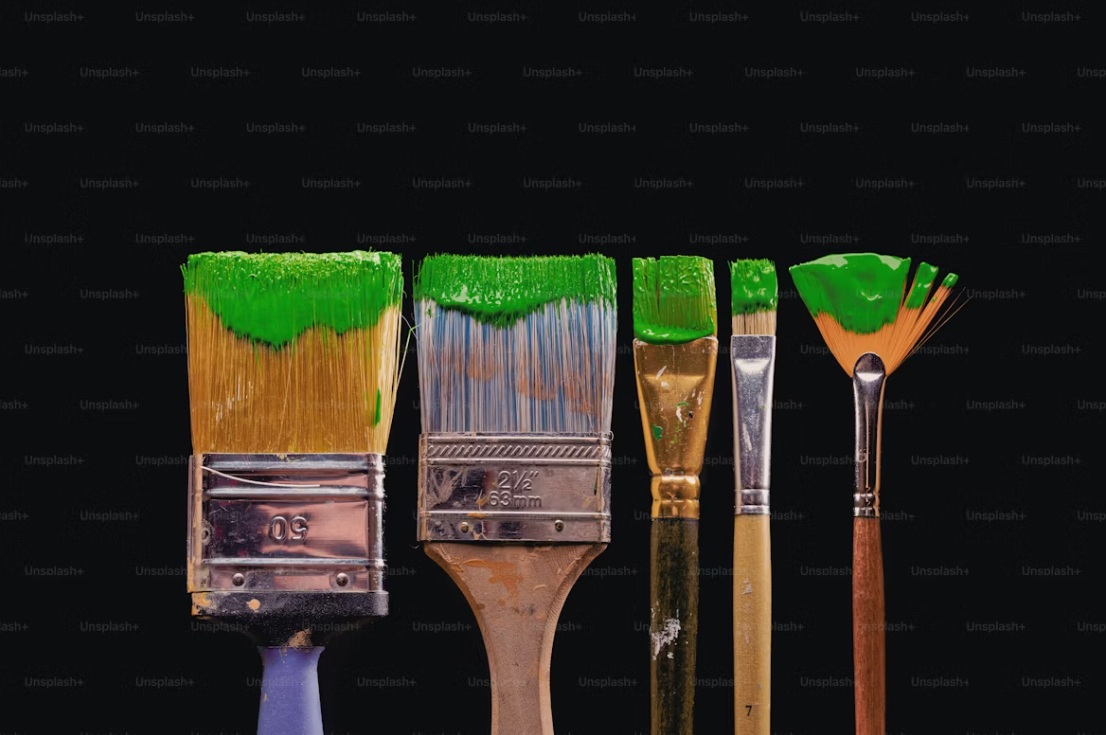
These strict dimensional tolerances are why wall brush production has significantly higher quality and technical barriers than flat brush manufacturing. Meeting them consistently across large production runs is a major challenge for purely manual workshops, where even small variations in worker operation, tool wear, or material batch can push critical dimensions outside the acceptable range.


 Rede IPv6 suportada
Deixe um recado
Digitalizar para Wechat :

Digitalizar para WhatsApp :